
Tuesday, 23 June 2026
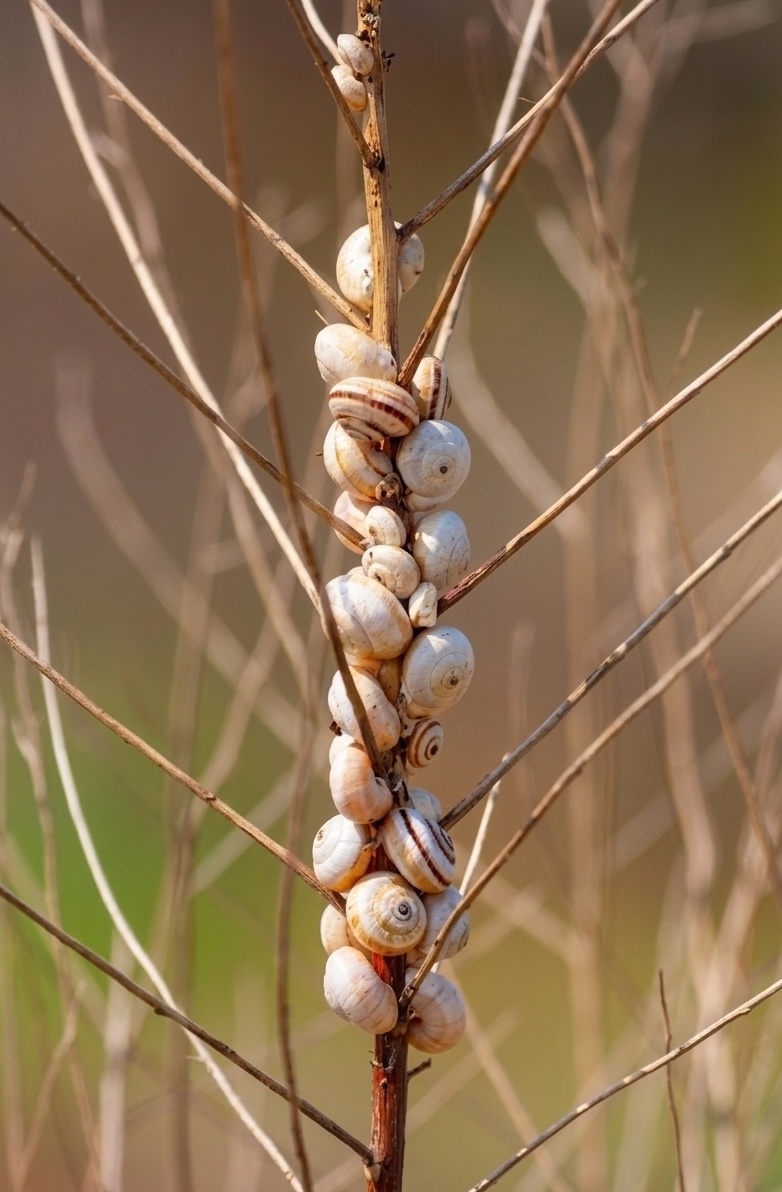
Snails are one of those foods that tend to divide opinion. Many vegetarians and vegans may find the idea unappealing, and even among omnivores they are certainly not to everyone's taste. Yet for my parents, who were true lovers of good food, snails were considered a delicacy and were a regular feature on our family table. Growing up in the countryside of southern Italy, on the limestone plateau of the Murgia in Puglia, I often spent summer days with my father collecting wild snails. It was a tradition that connected us to the land and to a way of life shaped by nature's seasonal gifts. We usually gathered three different types of snails. The smallest were tiny snails “ciamarchid” (Theba pisana) that clung to dried thistles during the hot summer months. These required no special preparation and were considered ready to cook as soon as they were collected.
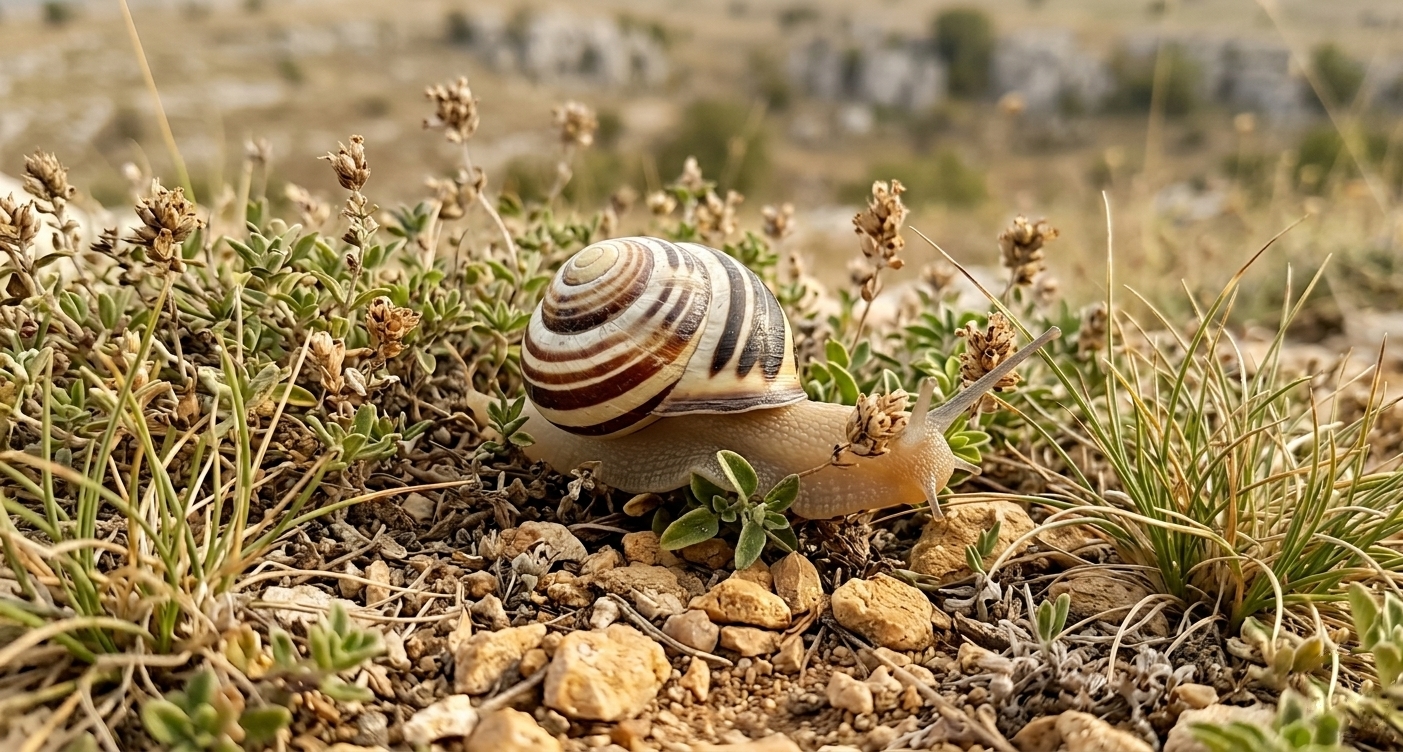
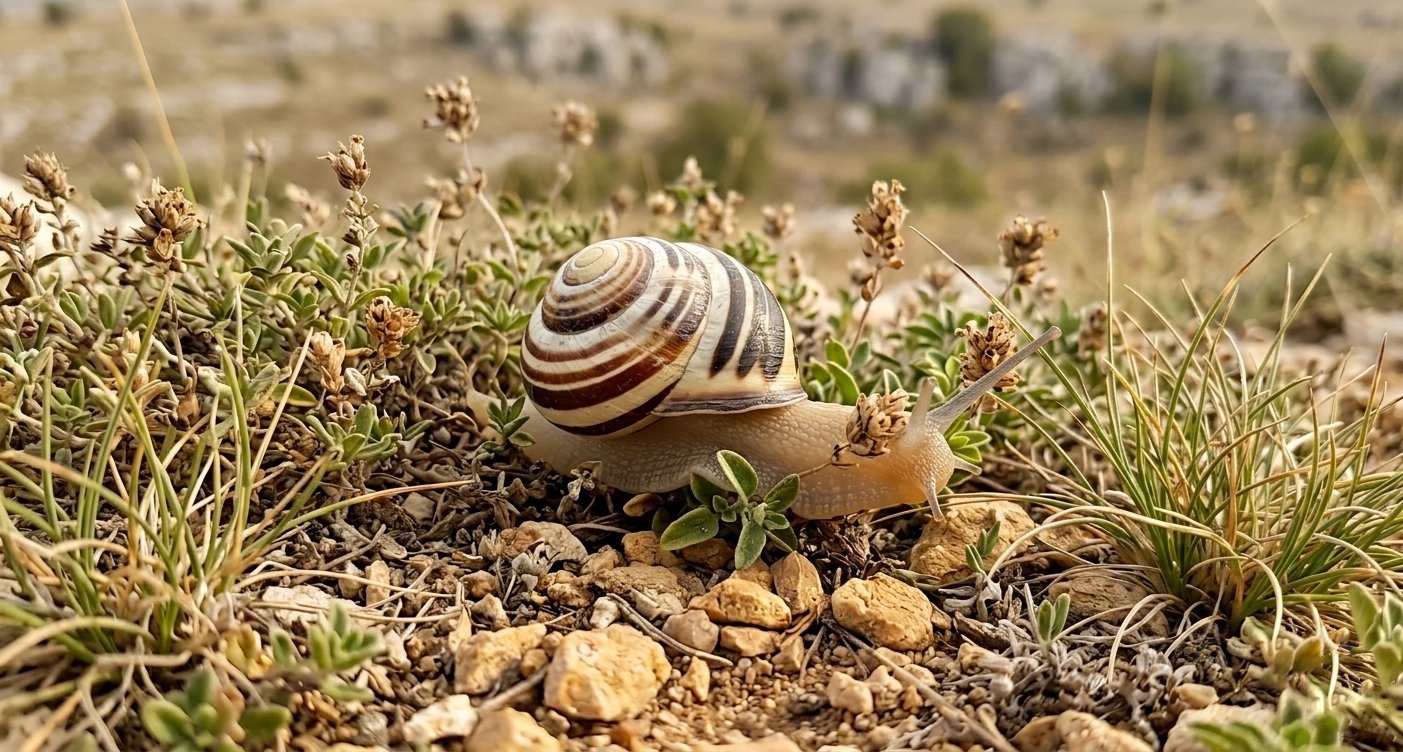
The second type were striped snails, “rigatelle” (Eobania vermiculata) which we found hiding among the stones of the traditional dry-stone walls that criss-cross the countryside. We also searched through piles of stones, carefully replacing them after collecting the snails. During the scorching southern Italian summers, the cool spaces between the stones provided the perfect refuge, making them easy to find. These snails required a cleansing process, known as purging, before they could be eaten. They were placed in large baskets with lids and lightly sprinkled with water to encourage them to emerge from their shells. They were then fed flour or breadcrumbs for several days. When their droppings turned white, a sign that their digestive systems had been cleared, they were considered ready for cooking.
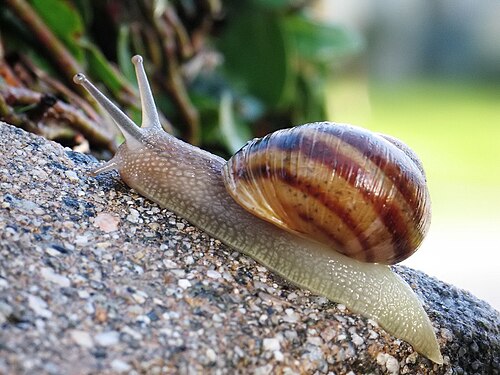
The third type were the large, dark snails that we called “cervoni” (Cornu aspersum). They were most commonly found after heavy rainfall and required the same purging process as the striped snails. At home, we had everything needed for this ritual. Large woven baskets were covered with fine netting secured with rows of clothes pegs around the rim. The baskets were kept in a sheltered courtyard, protected from direct sunlight, strong winds and rain. It was the ideal environment for preparing the snails.
Less frequently, we also enjoyed “monacelle” (Helix aperta Born), a variety particularly common in the Salento area of Puglia. These snails have very thin shells, firm flesh and a particularly tough white membrane. They were highly prized, exceptionally flavourful and often quite expensive.
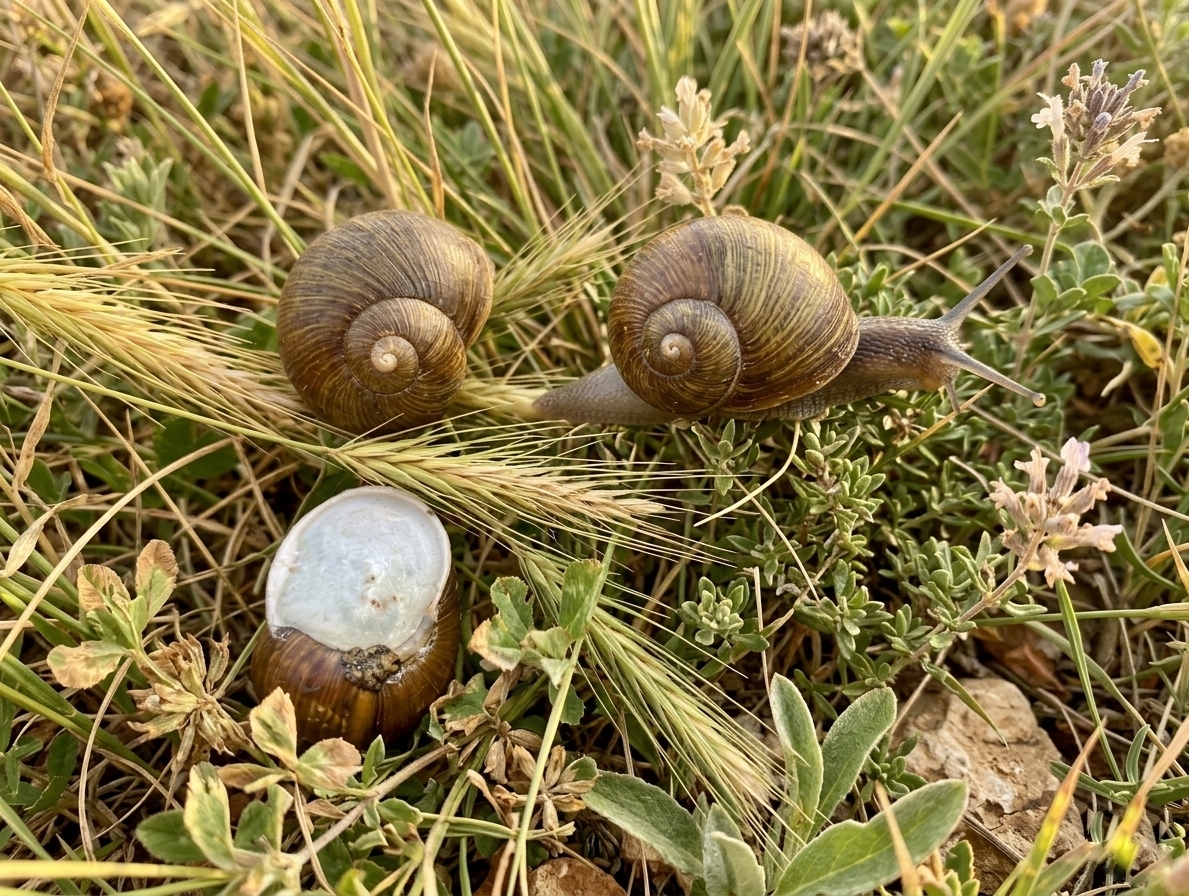
There are countless ways to cook snails. My mother most often sautéed them with garlic and extra virgin olive oil. The tiny snails were usually boiled and then dressed simply with fresh mint, olive oil and lemon juice—a wonderfully refreshing summer dish. One of the more unusual recipes featured in my e-books combines snails with mussels. While this pairing may sound surprising, in my parents' home it was considered a true delicacy and a perfect example of the creativity and resourcefulness of southern Italian cooking. Looking back, collecting and preparing snails was about much more than food. It was a family ritual, a lesson in patience, and a reminder of a time when people lived in close harmony with the rhythms of nature. Even today, those memories remain among the most vivid flavours of my childhood.