Sunday, 4 May 2025
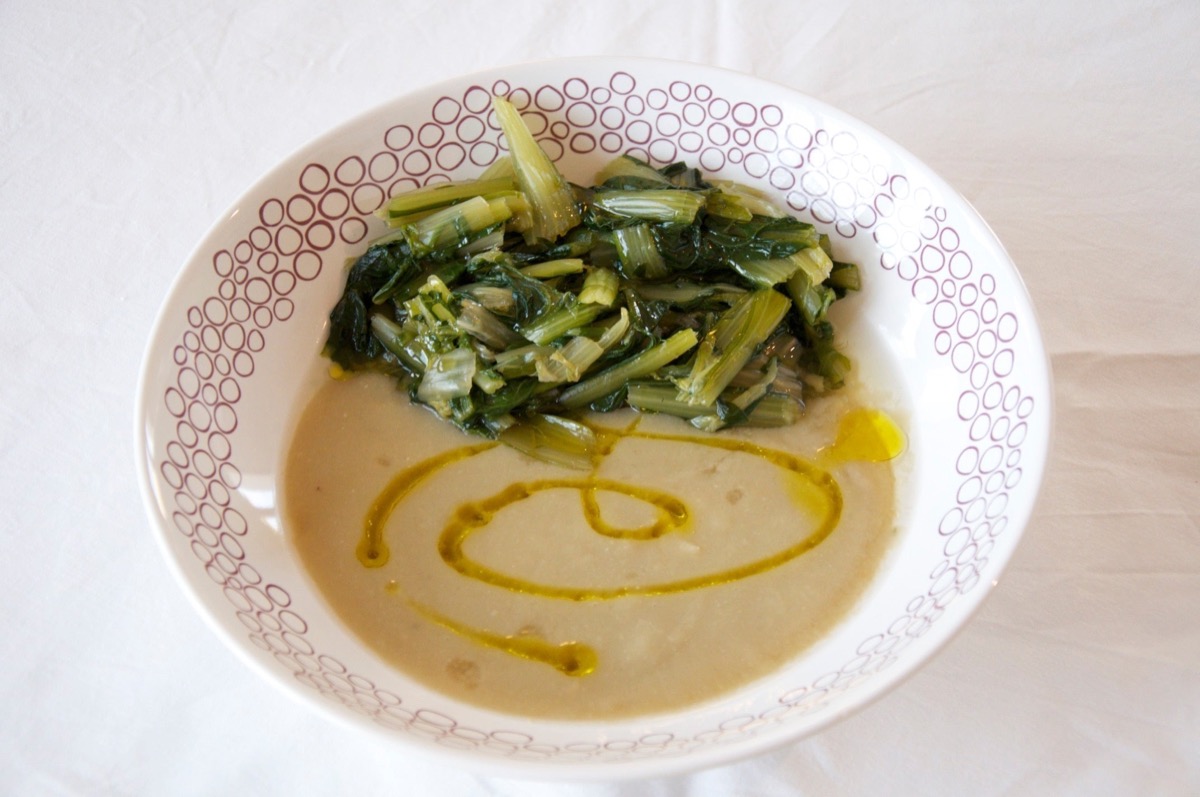
My mother often prepared dried fava beans with wild chicory — a simple, rustic dish that was a staple in our home. I never once saw her remove the skins before cooking them. In our family, thanks to my father, almost everything was considered edible. He raised us to waste nothing and to eat everything nature had to offer.
Even when my children were little, they ate whole fava beans — skins and all — alongside bitter greens. This always surprised my friends, but for me, it was perfectly normal.
In our house, dried fava beans had another purpose too: we used them to cover the numbers during tombola (our version of bingo). Because they're flat, they wouldn't roll off the board at the slightest movement — unlike beans, which never stayed in place!
When my father suffered from heartburn, he would slowly chew on a dried, peeled fava bean. For him, it worked like a charm. He used to tell me that his own mother had done the same. I'm not sure what medicinal properties fava beans may have, but the remedy had been passed down for generations.
During the war, my mother, her sisters, and my grandmother would knead vast quantities of bread dough. A young apprentice from the bakery would come to the house, balance a long wooden board on his head, and cycle the loaves to the communal oven for baking.
When wheat flour was scarce, my mother told me, they would stretch it with fava bean flour. But they had to keep it secret — fava flour was seen as too humble, something fit for livestock rather than people.
This dish still lives in my kitchen today — here's how I make it.
This simple and humble recipe is very common across Puglia. It's traditionally made with peeled dried fava beans (fave decorticate), which are quicker to cook and easier to digest — making the preparation much more straightforward.